1. Reredos
The carved wooden screen behind the altar provides a visual focus for worship.
Explore the sacred furnishings and spaces that shape our worship, from the altar and carved woodwork to the places where our congregation gathers.
Inside the sanctuaryExplore the floor planChurch symbolsWho wears what?The sanctuary contains the altar and places for the ministers. The numbered photograph identifies the furnishings in this view.
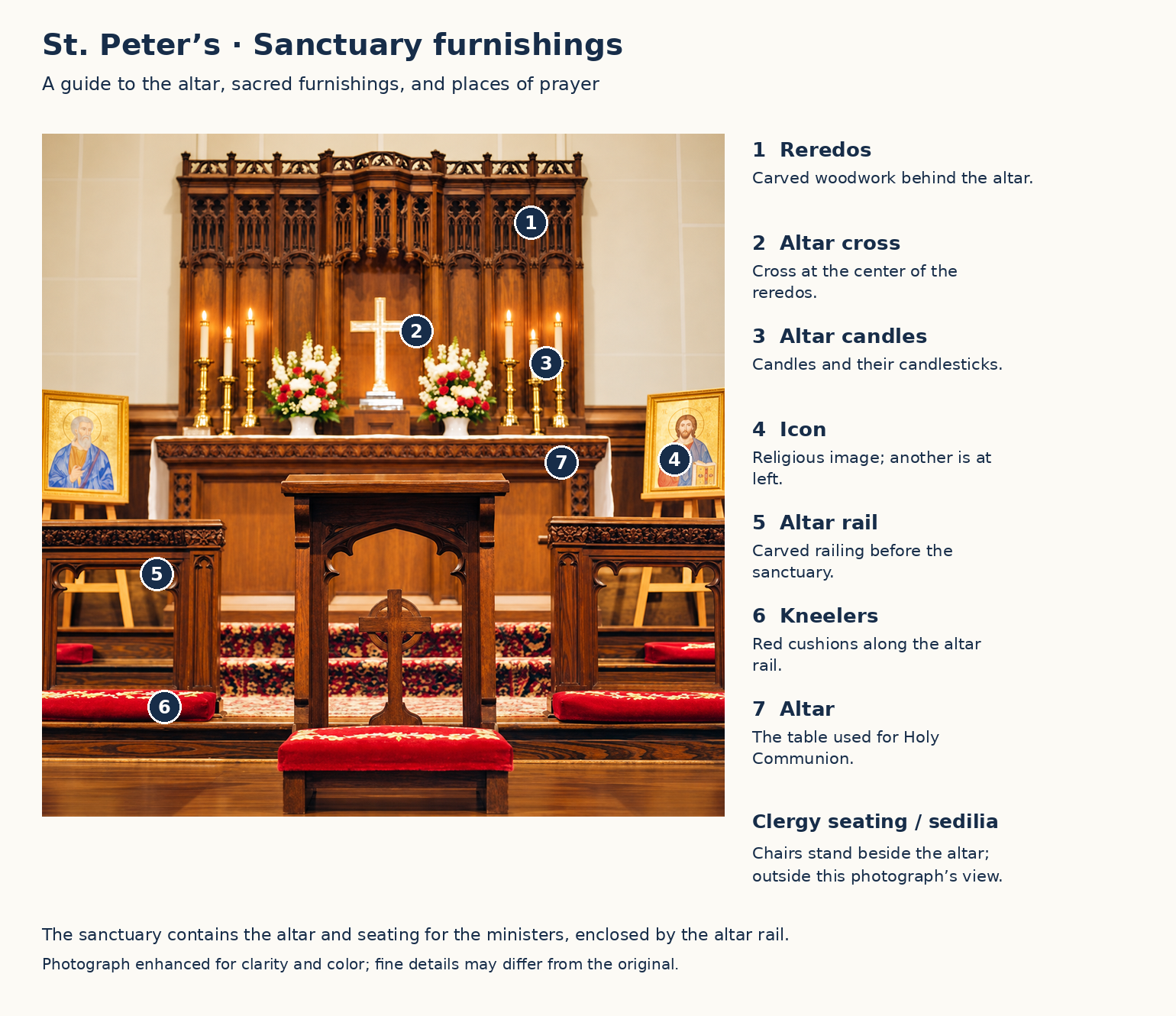
The carved wooden screen behind the altar provides a visual focus for worship.
The cross stands at the center of the sanctuary’s woodwork.
Candles and brass candlesticks flank the cross and floral arrangements.
Religious images stand on either side of the altar.
The carved rail marks the boundary of the sanctuary.
Red cushions provide a place to kneel at the altar rail.
The table used for the celebration of Holy Communion.
Two chairs stand beside the altar, outside this photograph’s view. Their approximate locations appear on the floor plan below.
Follow the center aisle from the narthex through the nave toward the chancel and sanctuary. The vestry is on the left, and the sacristy and chapel are on the right.
Open larger floor plan ↗
Christian art gives visible form to faith. These traditional meanings offer a starting point for looking at the furnishings and artwork at St. Peter’s.
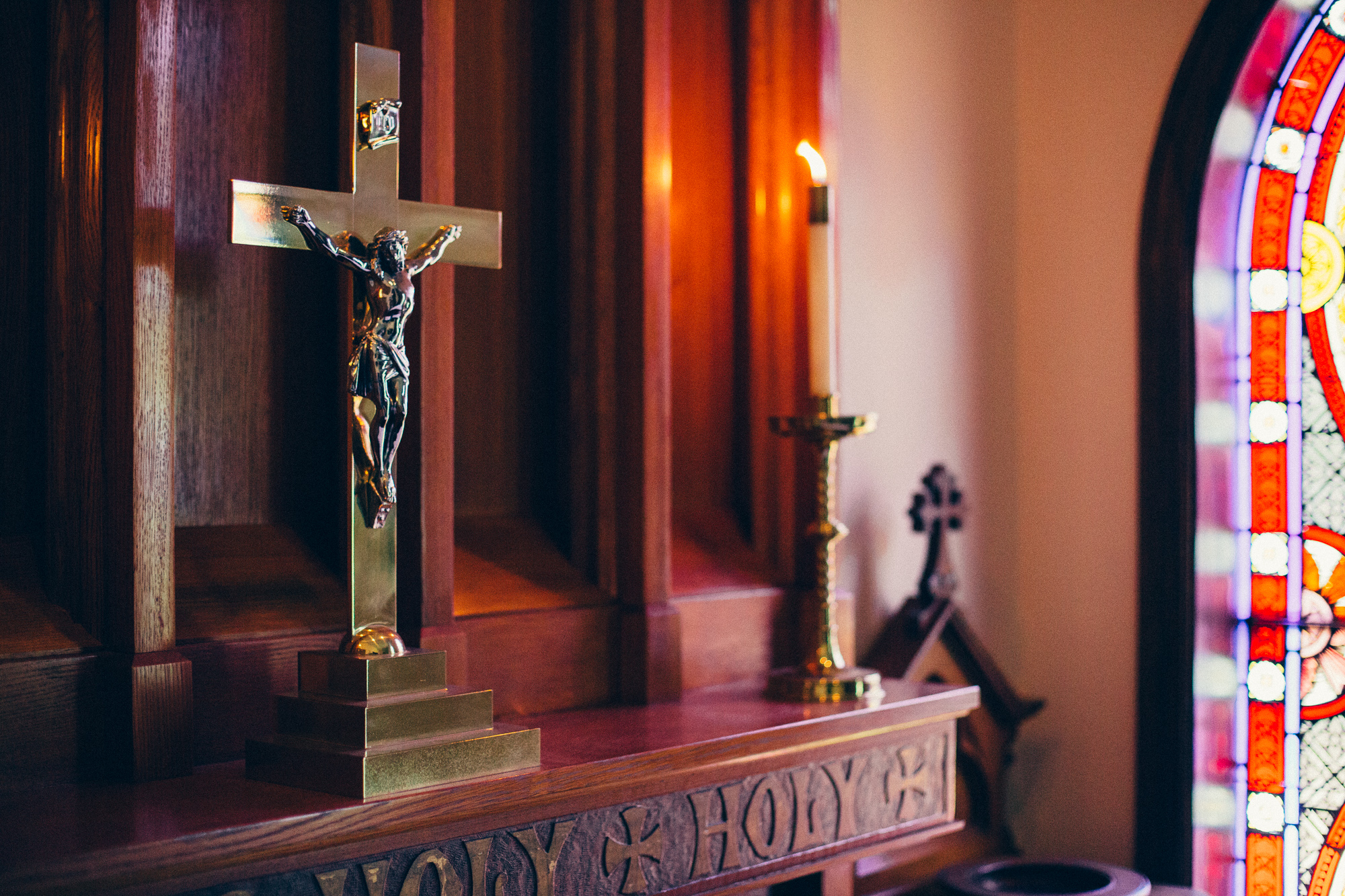
The cross recalls Jesus’ death and the hope of resurrection. An empty cross proclaims the risen Christ; a crucifix includes the figure of Jesus and emphasizes his self-giving love.
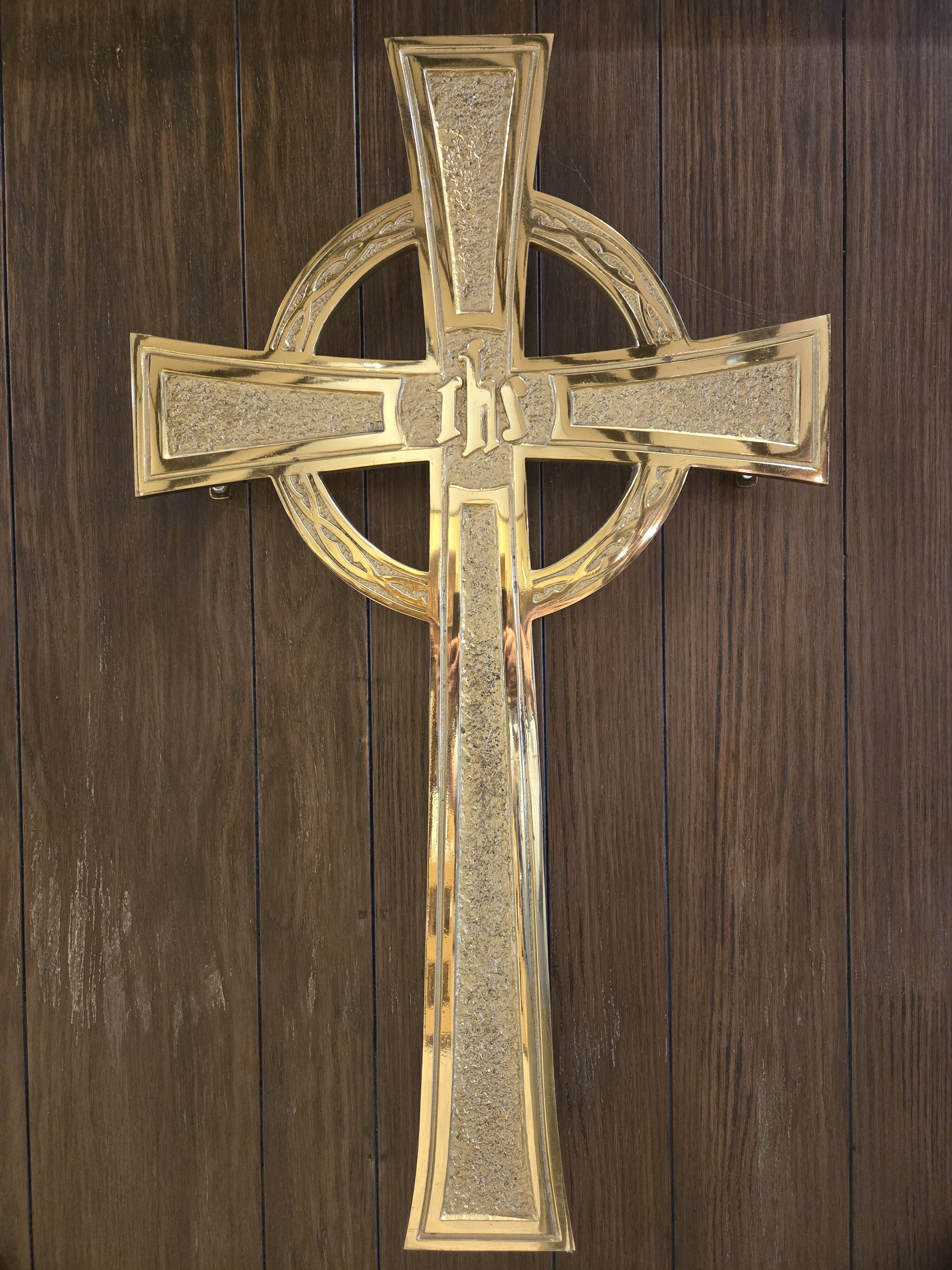
IHS is a monogram formed from the first three letters of Jesus’ name in Greek. Seen on crosses and church furnishings, it directs our attention to Christ. The Latin phrase Iesus Hominum Salvator, “Jesus, Savior of humankind,” is a later interpretation.

At the front right of the church, the eagle supports the Bible for the reading of Scripture. The eagle is also the traditional symbol of St. John, whose Gospel lifts our attention to the divine life of Christ.
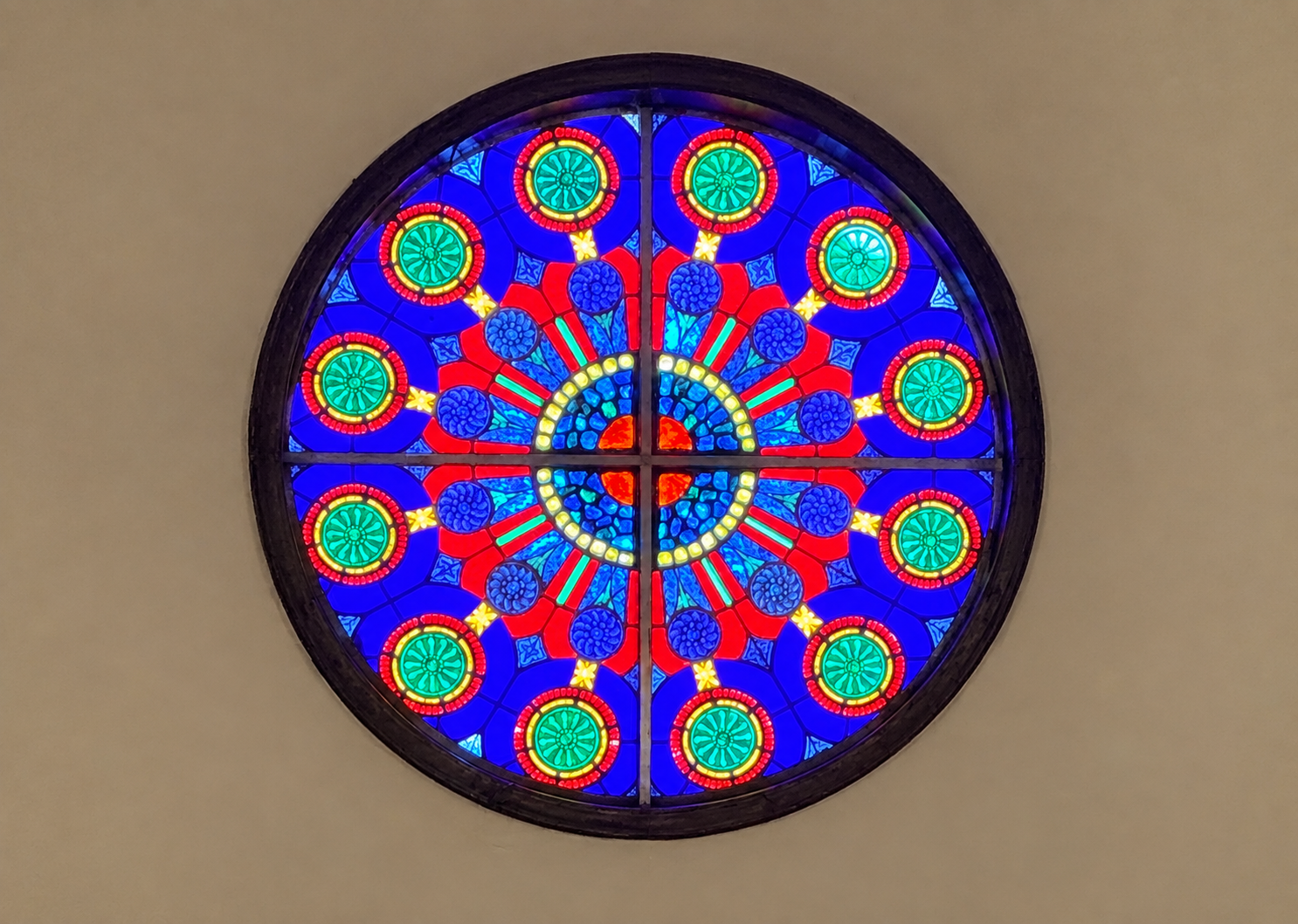
A rose window is a circular stained-glass window with a radiating, flowerlike design. As a devotional reflection, its circle can suggest eternity and its colored light can invite us to think of God’s beauty. Figures and emblems within stained glass tell their own biblical stories. The twelve outer circles offer a way to reflect on the twelve apostles gathered around Christ.
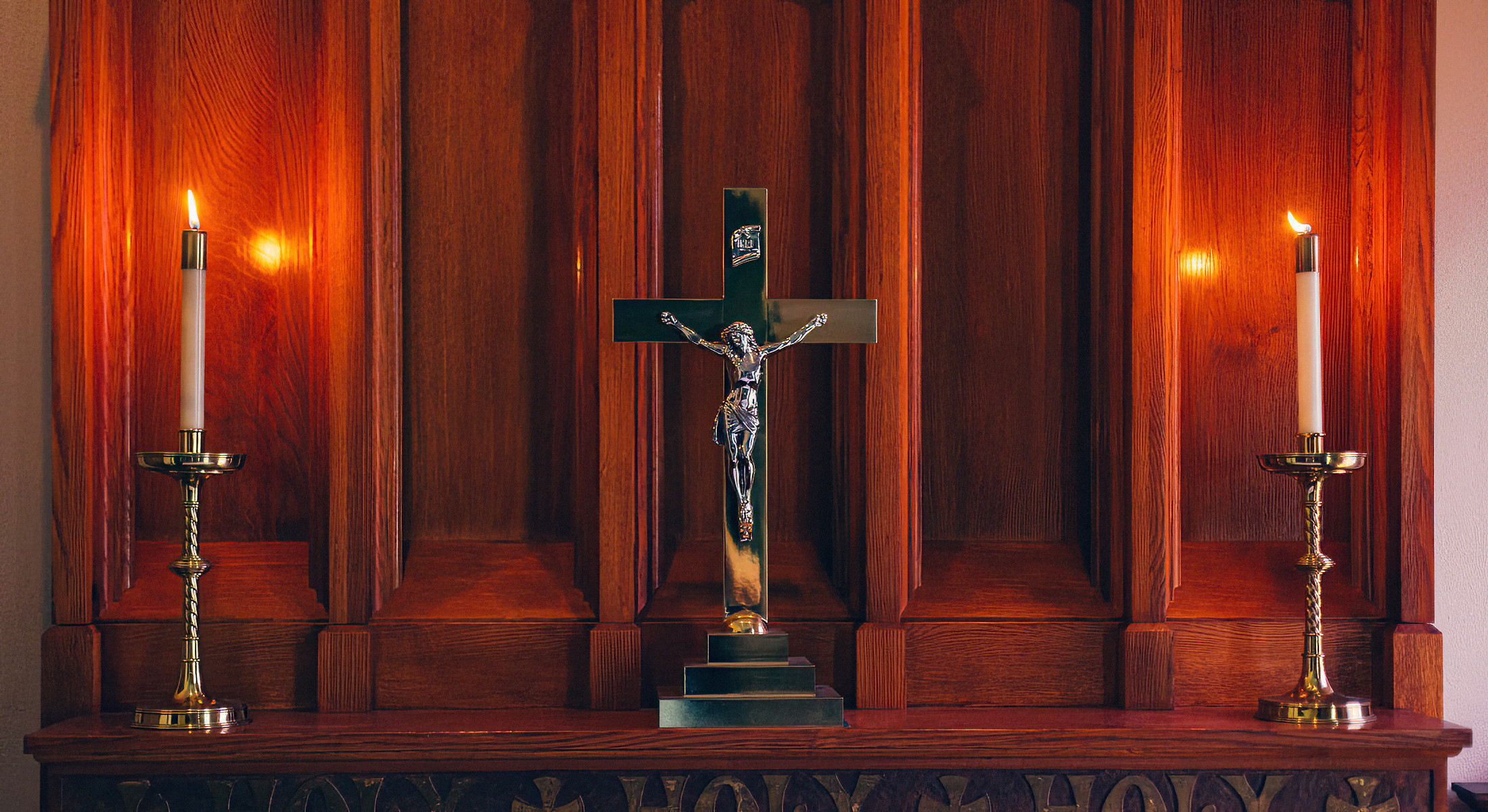
The candles beside the altar remind us of Christ as the light of the world (John 8:12). Their light accompanies the congregation’s prayer and worship.
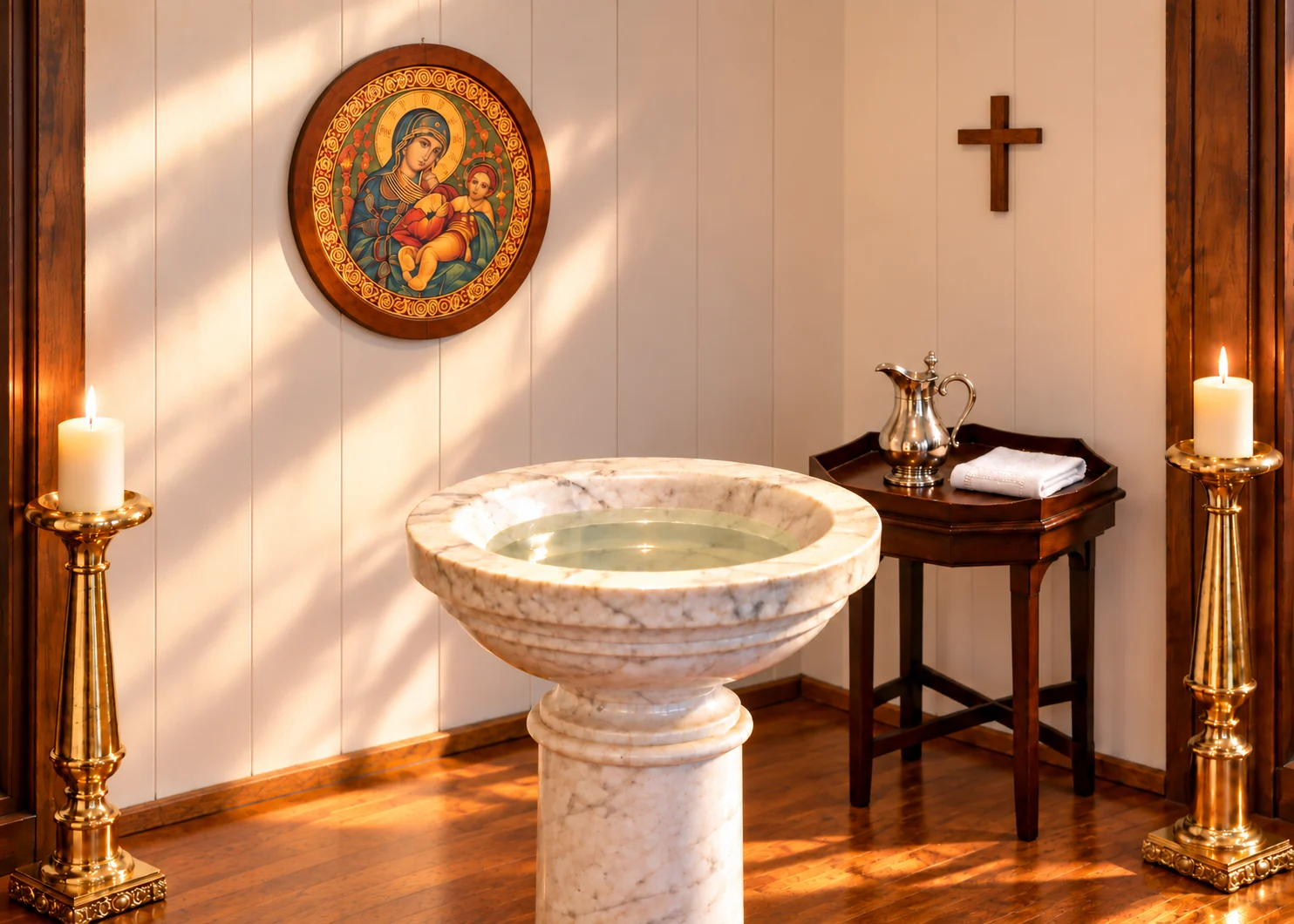
Near the back of the nave, the baptismal niche reminds us of our entry into the Christian life. The water of Baptism speaks of cleansing, new birth, and sharing in Christ’s death and resurrection (Romans 6:3–4).
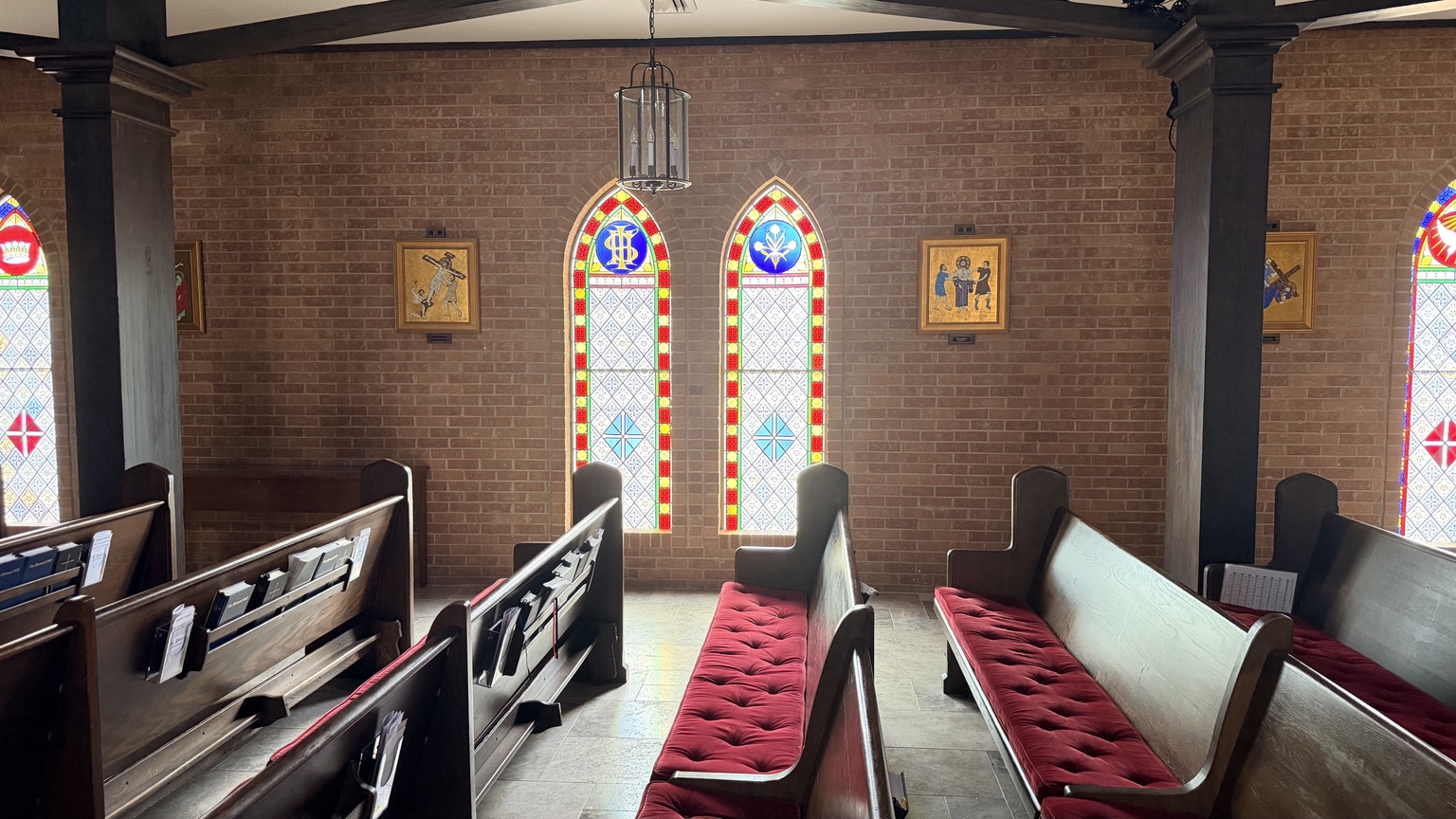
The IHS monogram appears in the left window in this photograph, echoing the name of Jesus on our cross. The floral design in its companion window adds another expression of beauty to the nave.
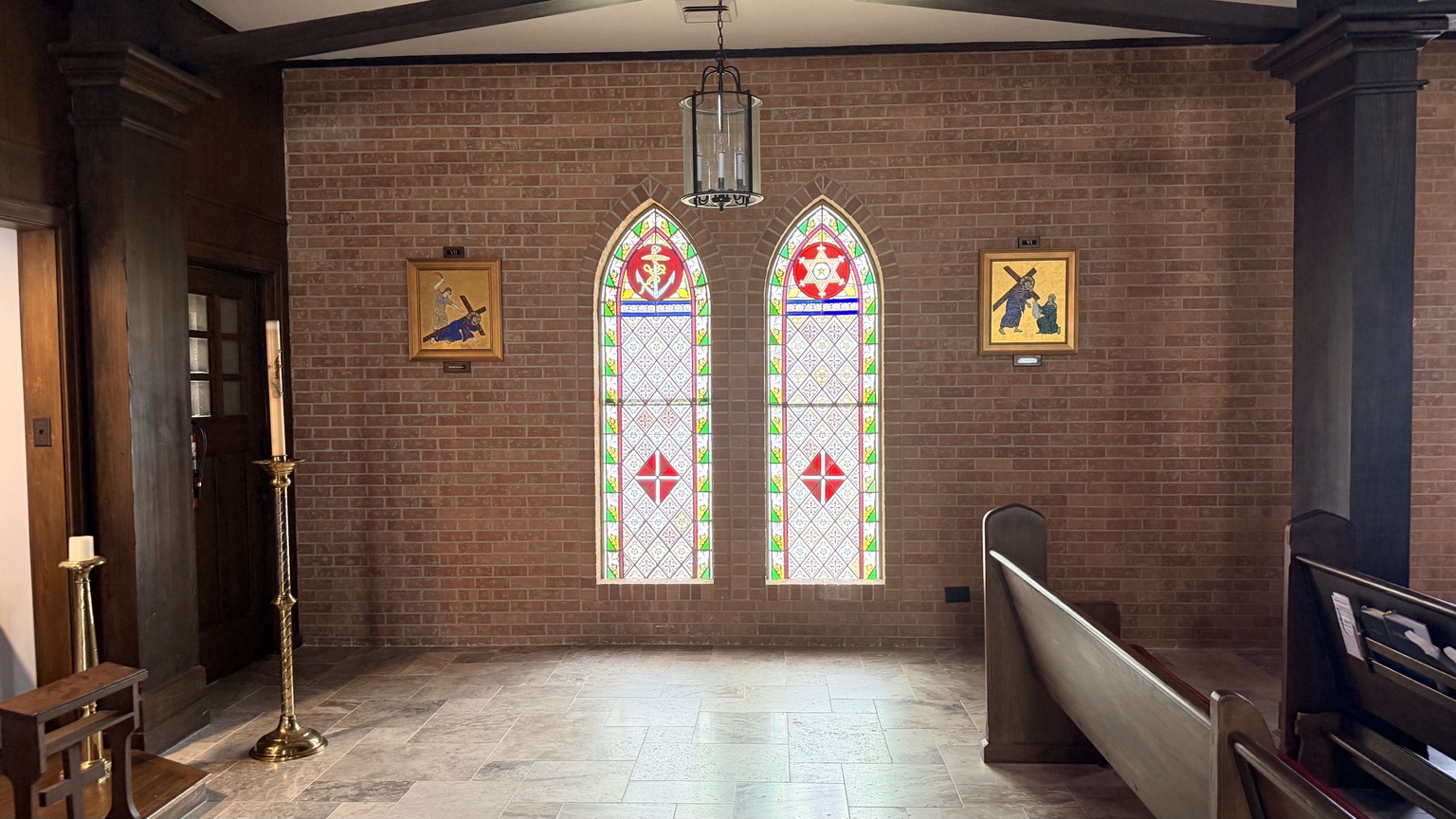
The anchor is a traditional Christian emblem of hope, recalling Hebrews 6:19. The six-pointed star is widely known as the Star of David; in a Christian setting, it can invite reflection on the Jewish roots of our faith.
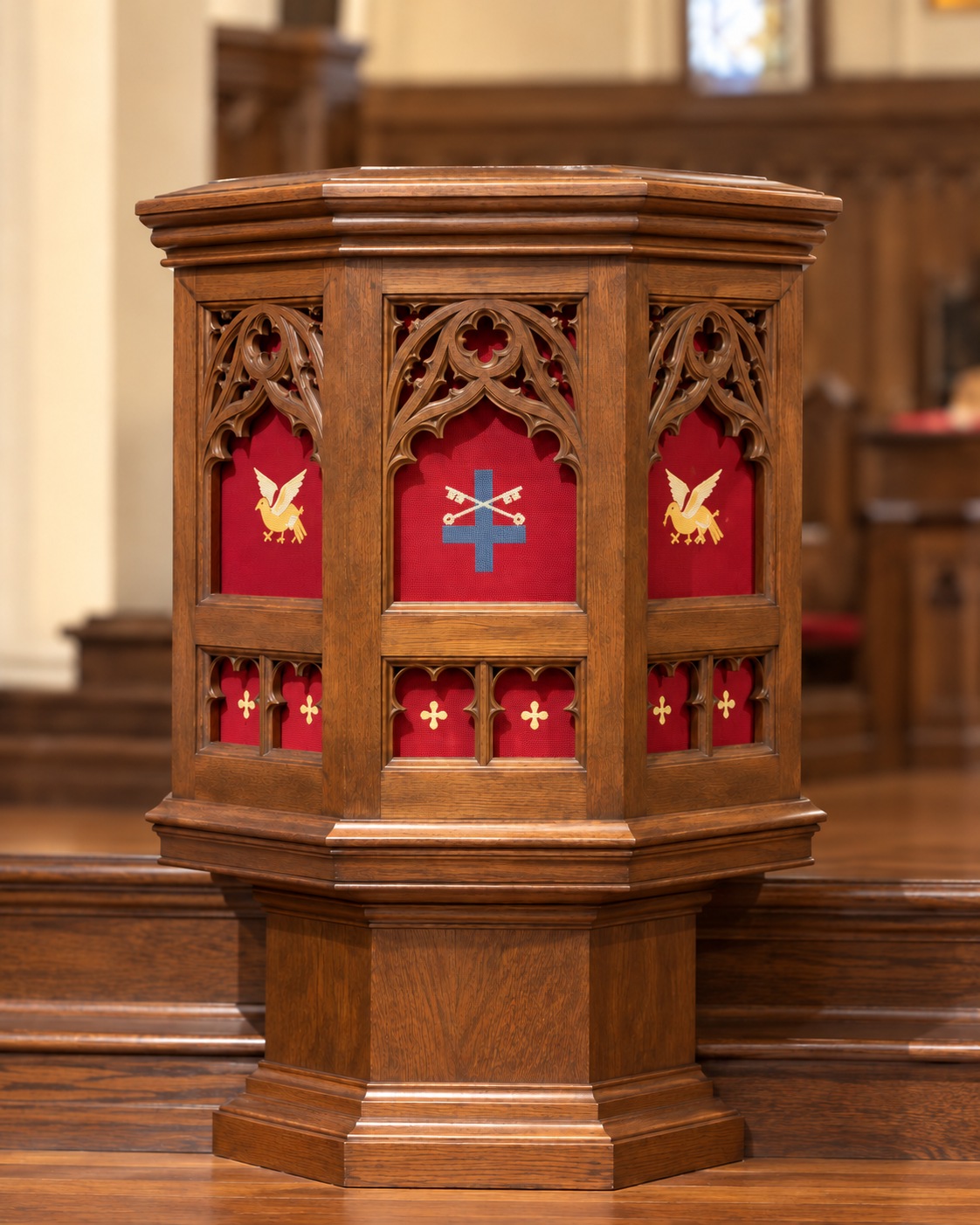
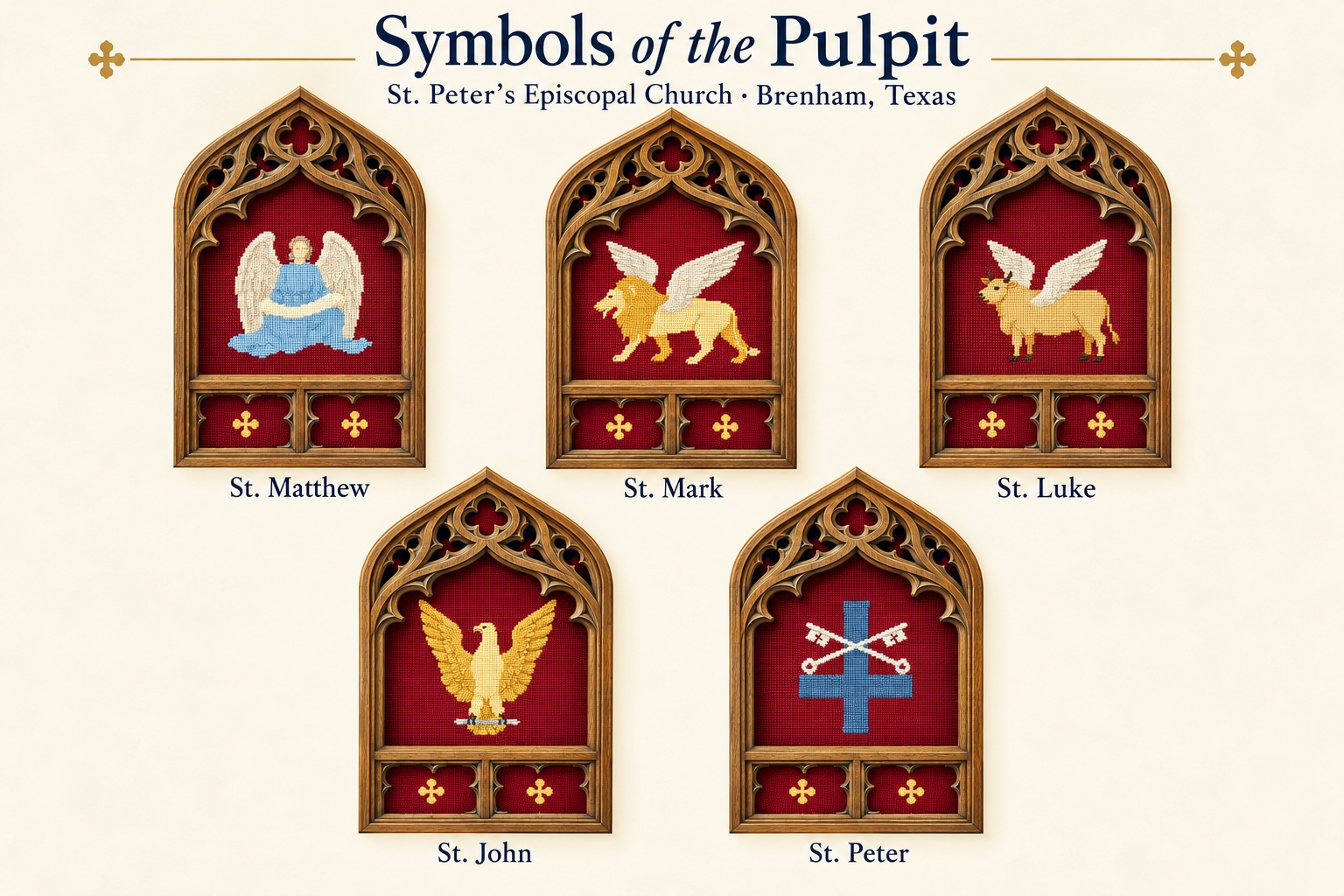
The illustrated panels shown here are based on the needlework at St. Peter’s. The winged figures traditionally associated with Matthew, Mark, Luke, and John draw on the living creatures in Ezekiel 1 and Revelation 4. They help us recognize the four voices that proclaim one Gospel of Jesus Christ.
The winged human figure, often called an angel, recalls Jesus’ humanity. Matthew begins his Gospel with Jesus’ genealogy.
The lion recalls the powerful voice crying in the wilderness at the opening of Mark’s Gospel.
The ox is a traditional symbol of sacrifice and service. Luke begins with Zechariah serving in the Temple.
The eagle evokes the spiritual heights of John’s Gospel and its vision of Jesus as the eternal Word.
The inverted cross recalls the tradition that Peter asked to be crucified upside down, feeling unworthy to die in the same manner as Jesus. The crossed keys recall Christ’s promise to Peter in Matthew 16:19. Together, they express our patron saint’s humility, faithful witness, and service.
Learn more: National Altar Guild Association: Christian symbolism; the meaning of IHS; the four Evangelists; rose windows.
The robes and other garments used in worship are called vestments. They help identify a person’s ministry and connect today’s worship with the Church’s long tradition. At St. Peter’s, white and cream are the robe colors most often seen. Our choir wears black cassocks with white surplices over them, and our acolytes wear cream or white albs with rope belts. Other garments vary with the minister’s role and the service.
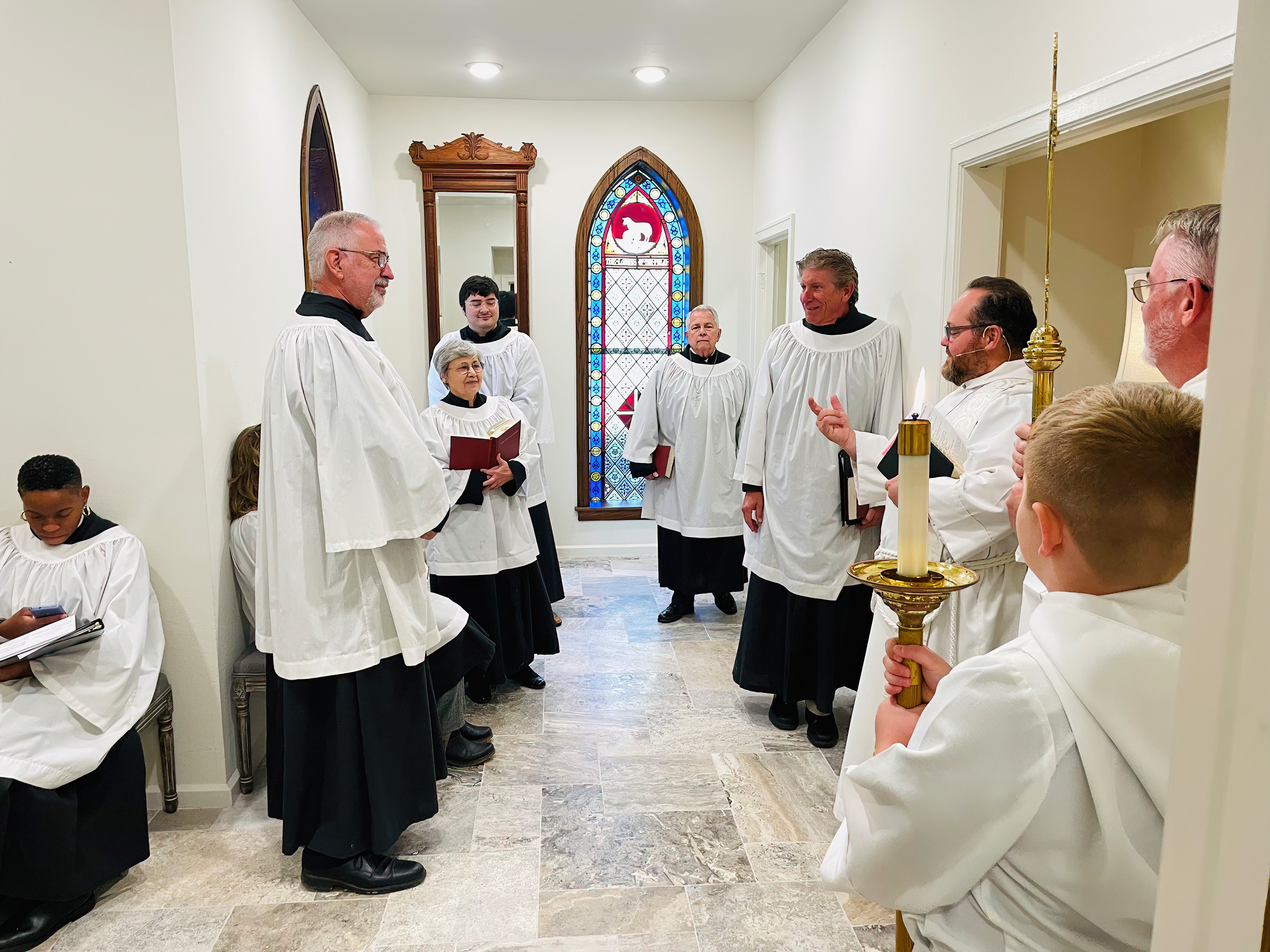
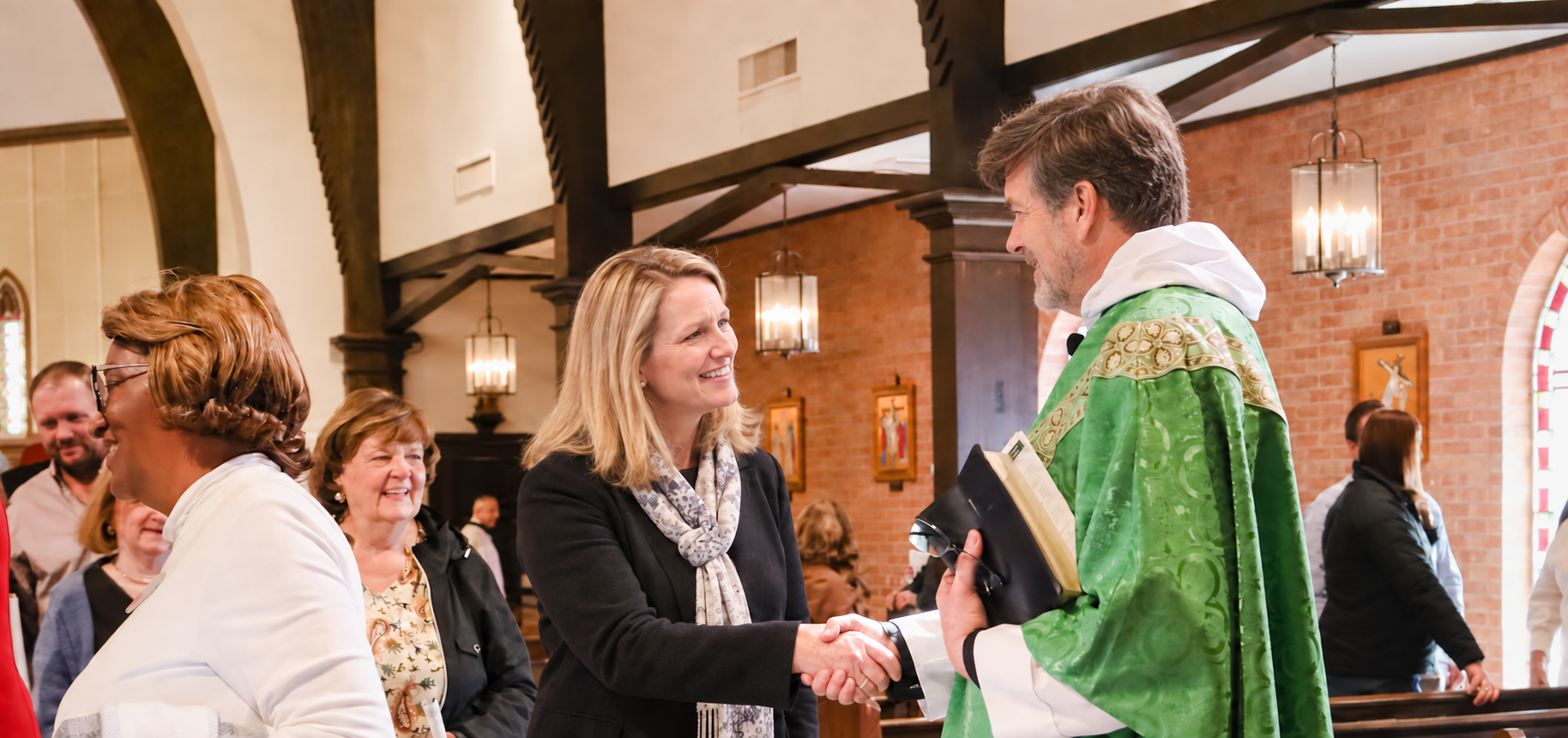
An alb is a long white or cream robe. Over it, an ordained minister wears a stole: a long band of fabric. A priest’s stole hangs from both shoulders; a deacon’s crosses diagonally from the left shoulder. The priest celebrating the Eucharist may also wear a chasuble, a broad outer garment.
At St. Peter’s, choir members wear a black cassock, the long robe underneath, covered by a white surplice, the loose garment with wide sleeves. Their shared dress expresses their common ministry of leading the congregation in song.
Lectors proclaim the Scripture readings assigned to lay readers. Depending on local custom, they may wear ordinary church clothing, an alb, or a cassock and surplice. Their ministry is identified by the reading they offer, rather than by one required style of robe.
At St. Peter’s, acolytes wear cream or white albs, long robes secured with a rope belt called a cincture. Acolytes assist at the altar and may carry the processional cross or candles.
A bishop may wear the Eucharistic vestments used by a priest, together with a mitre, the pointed ceremonial hat. A crozier, shaped like a shepherd’s staff, expresses pastoral care. A pectoral cross is worn on the chest. For some services, a bishop wears a white rochet with a sleeveless chimere over it.
Vestments and altar hangings follow the seasons and feasts of the Church year. White or gold expresses celebration; green, growth; purple, penitence and preparation; and red, the Holy Spirit and the witness of martyrs. Blue is also used for Advent in some parishes.
Illustrated reading: Anglican Vestments (Robes) and Clericals Explained, adapted by the Rt. Rev. Thomas A. Corston. The descriptions above reflect St. Peter’s practices alongside common Episcopal usage.
Reference: The Episcopal Church’s glossary; Grace Episcopal Cathedral’s acolyte handbook; All Saints’ worship guide; a guide to liturgical colors.